Our Curriculum
LettersPractice teaches two kinds of thing.
First, the big ideas or categories of phonetic rules — like letters make sounds or two letters can team up to make a sound. These arrive in micro lessons that a grown-up reads aloud.
Second, each big idea holds a collection of facts — like or . These arrive one at a time, in everyday practice.
But not all facts are created equal. , from Lesson 2, gets more use than Lesson 1's , , and put together. So we allow for multiple active lessons to feed content at once — data driven — the most useful facts first.
At any given time, a learner is getting familiar with one or two new facts and a maximum of one new idea, always focused on growth toward real world reading independence.
Learn more about how we manage a user's active content in the Learning Engine page.
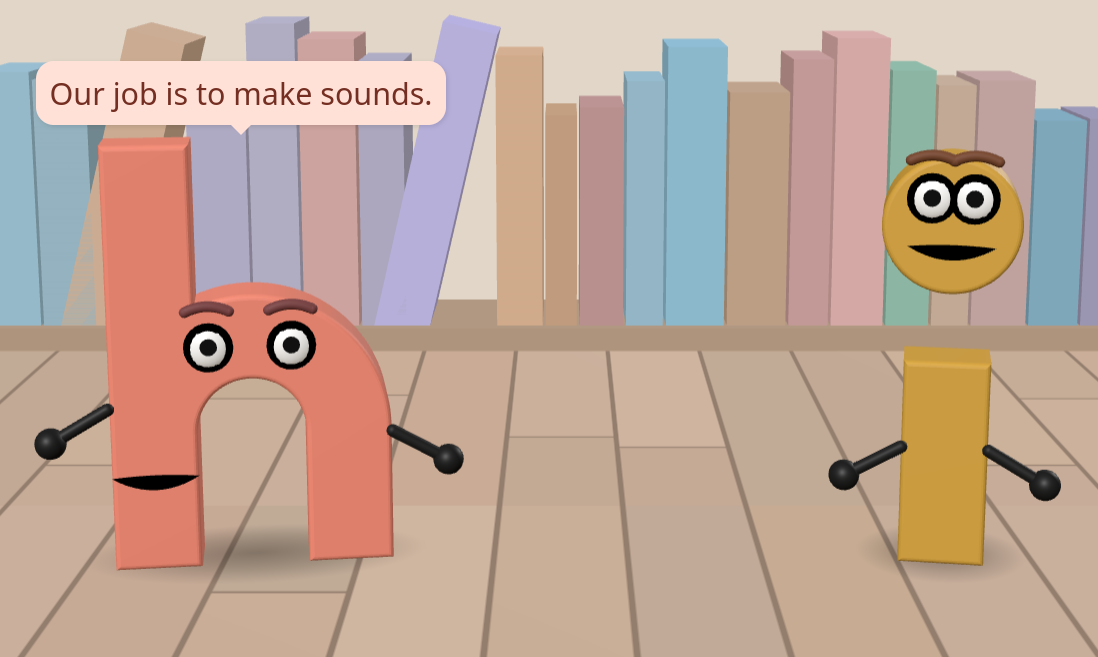
From the first session
Lesson 1: Meet the Letters
Letters make sounds! Starting with the most common letter-sound relationships.
Facts for this idea:
Opens around session 12
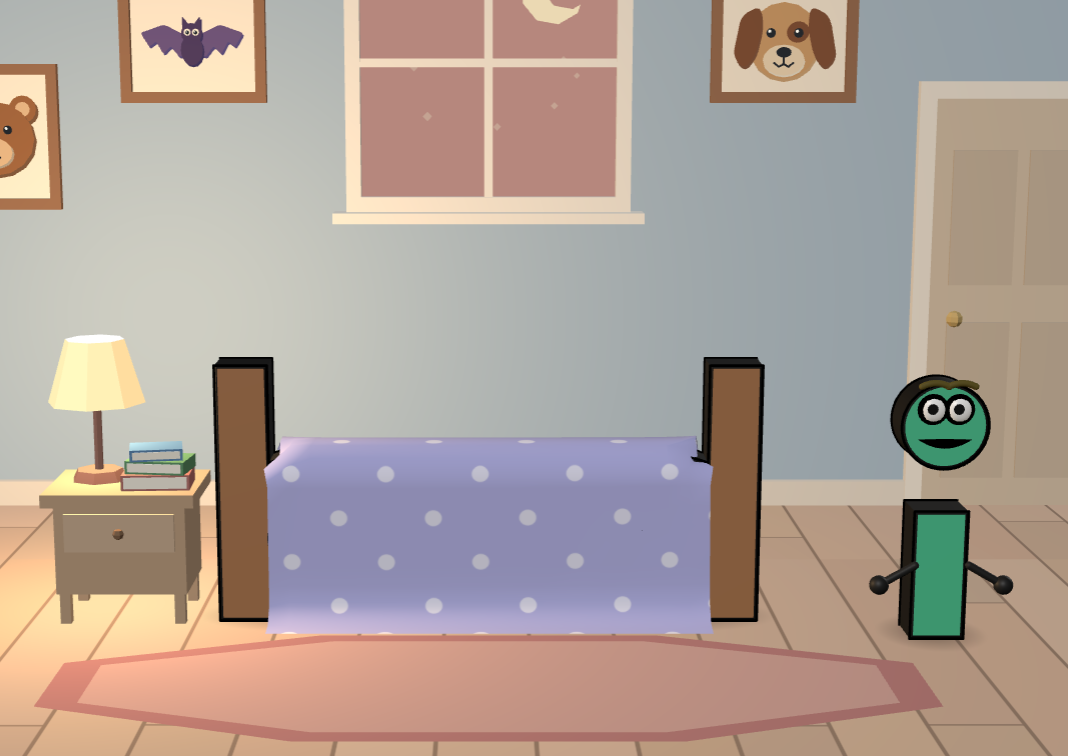
Lesson 1a: Making our bed
A handy way to remember and check the difference between b and d.
Facts for this idea:
Opens around session 11
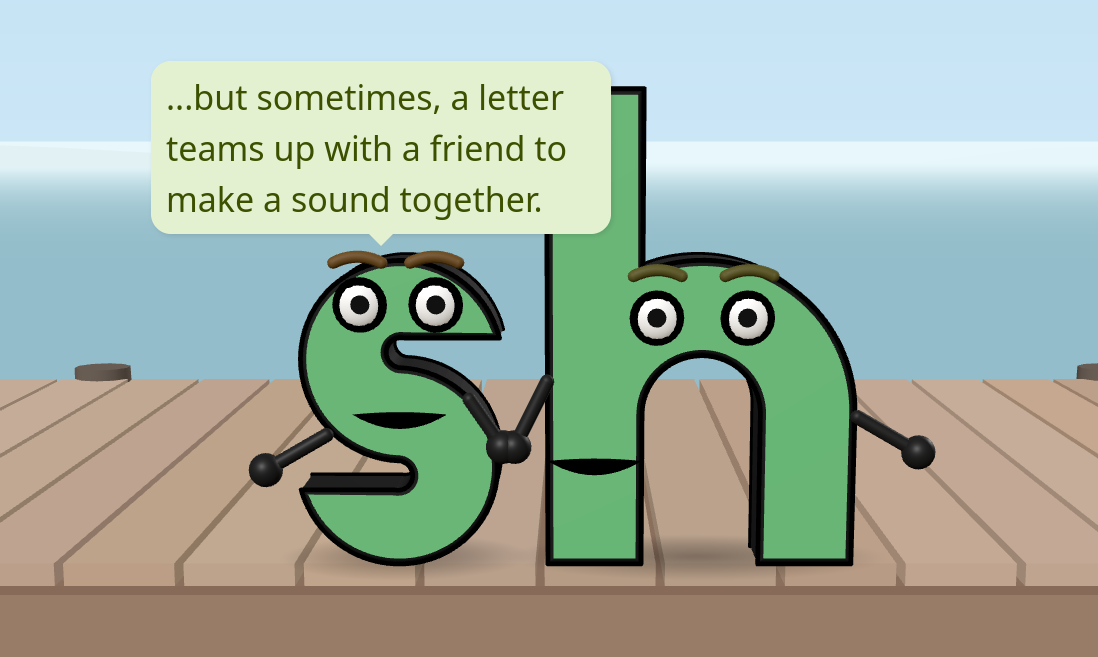
Lesson 2: Letter Teammates
Sometimes two letters team up to make a sound.
Facts for this idea:
Opens around session 22
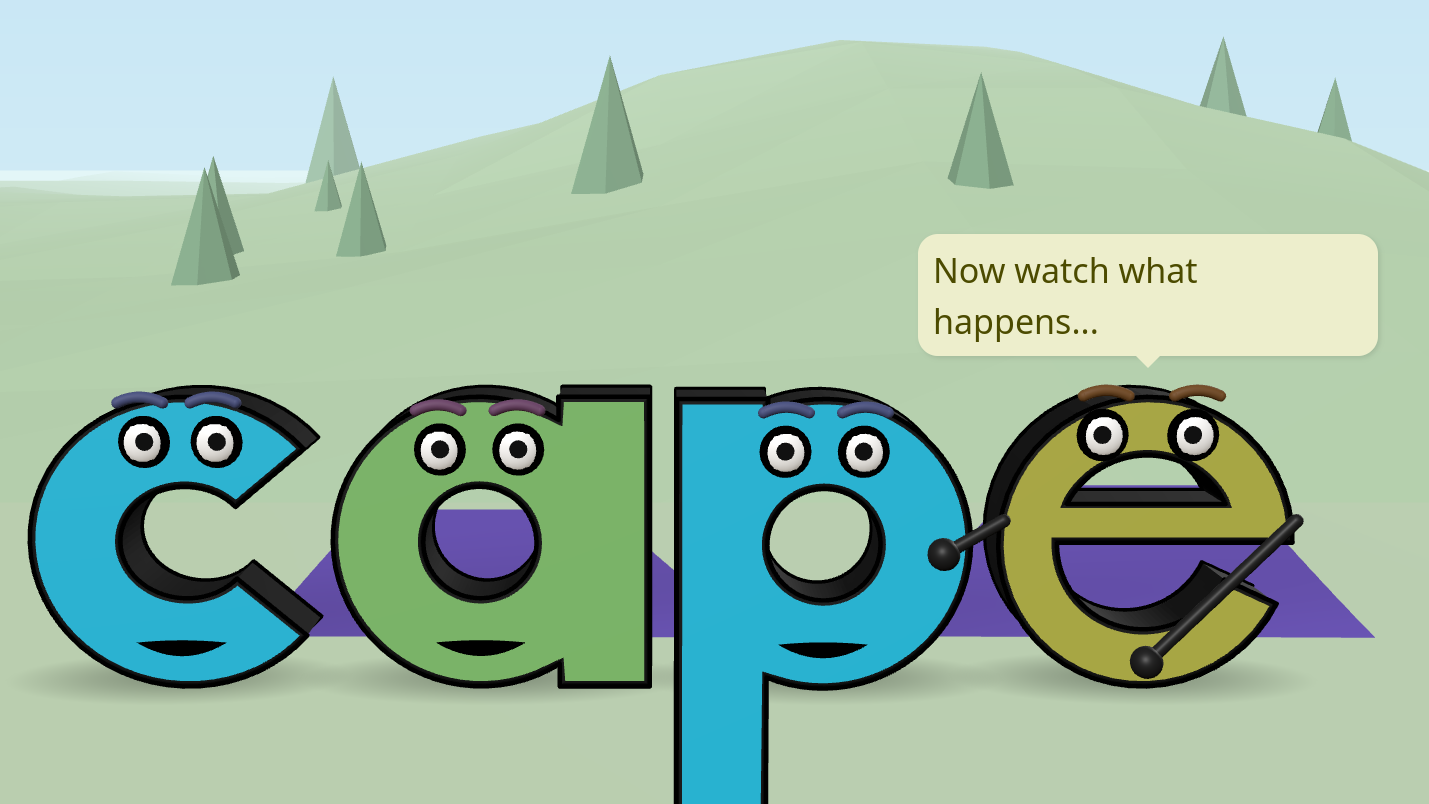
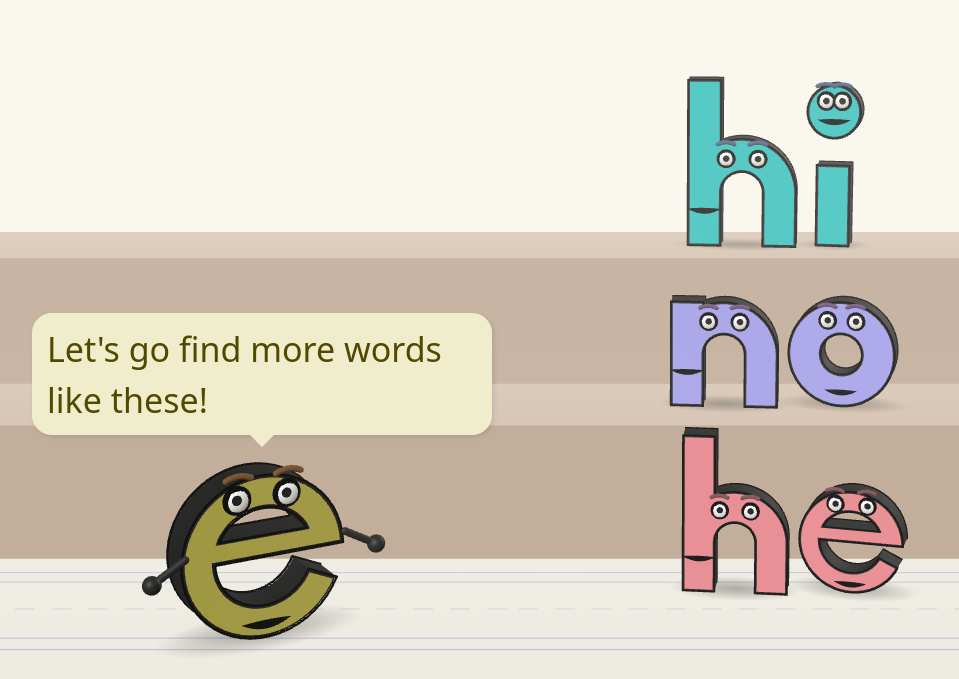
Lesson 3: The Sneaky e
e teams up with a, i, o, u and sometimes itself in a different way.
Facts for this idea:
Opens around session 30
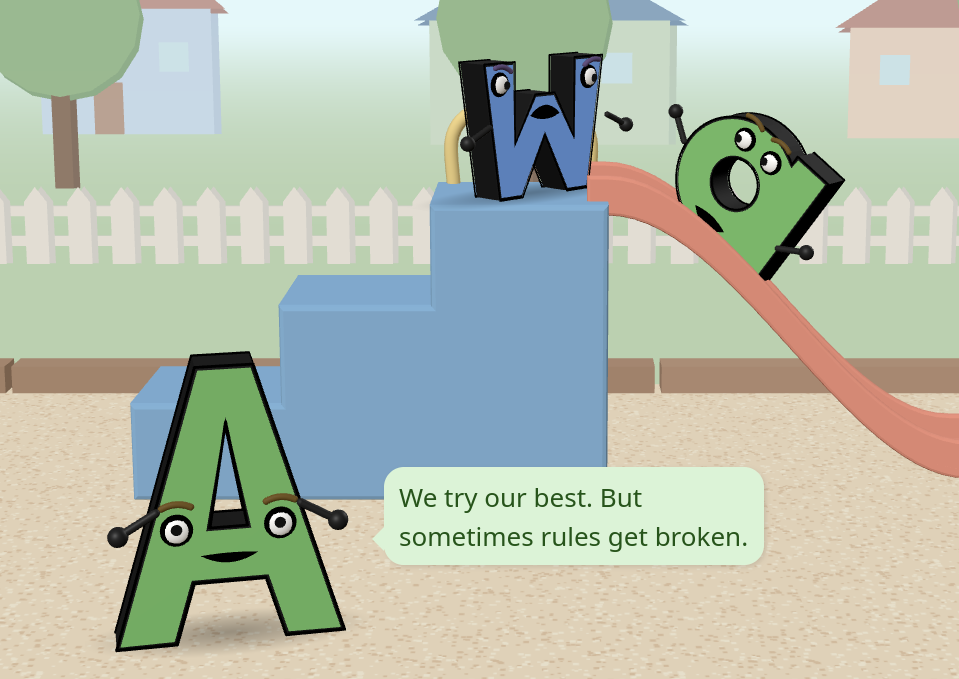
Lesson 4: Vowels at the End
A vowel at the end of a word can make its changed sound all by itself — no sneaky e required.
Facts for this idea:
Opens around session 33
Lesson 5: Weird Words
Sometimes letters break the rules. We learn some common words by heart.
Facts for this idea:
As facts are released into rotation, they fall into the hands of our learning engine, which selects exercises optimized for uptake, retention, and recombining the old with the new. When facts are shaky, new facts are stopped until we have good evidence of recovery and solidification.
Learn more about the engine:
Learning Engine